
Physiotherapy After Knee Surgery: Rehab Stages and How Long Recovery Takes
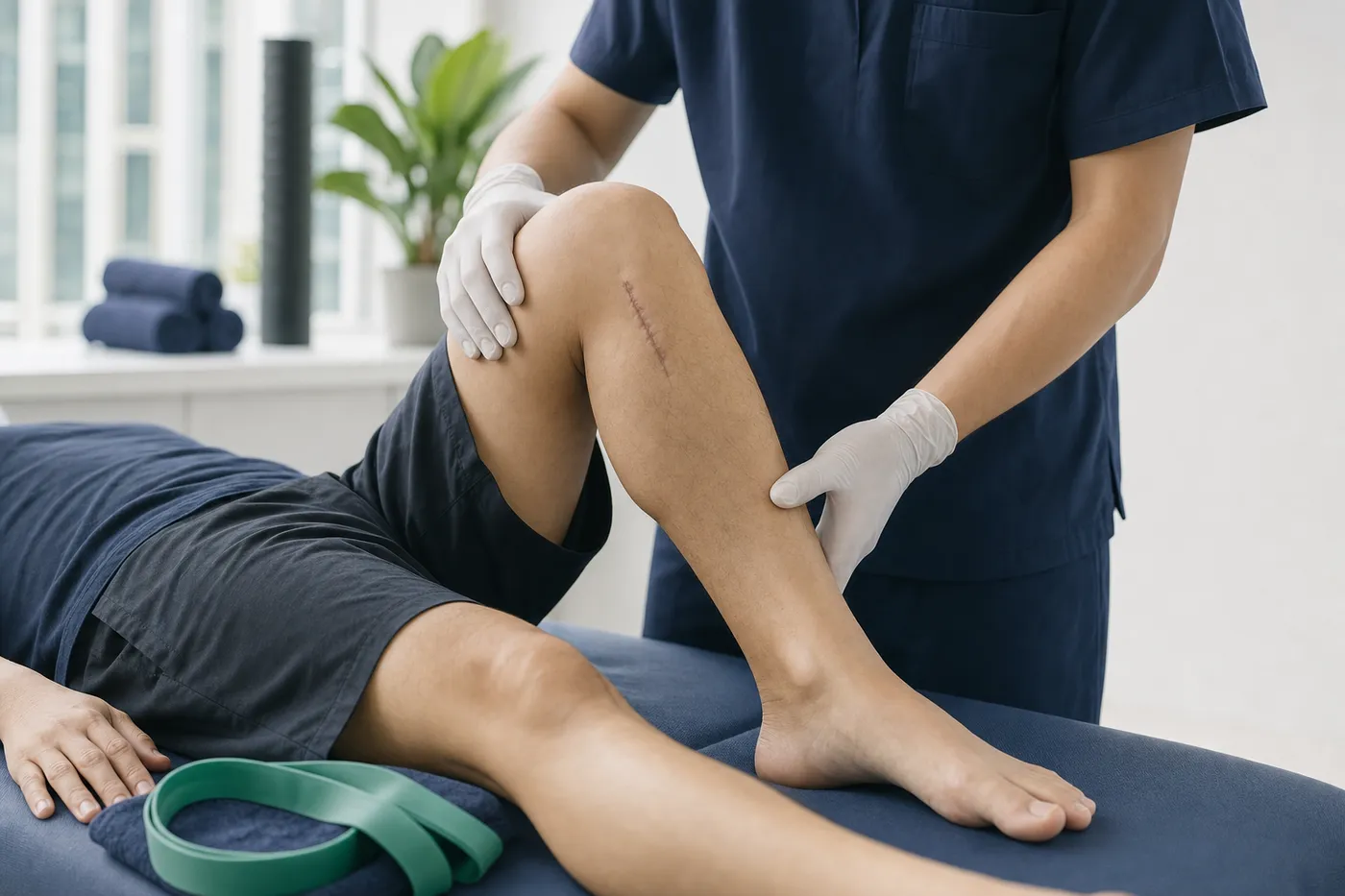
After knee surgery, such as ACL reconstruction, meniscus surgery or a knee replacement, physiotherapy helps you gradually regain movement, strength and confidence in walking. Recovery usually takes several months, and returning to sport after ACL reconstruction can take up to about a year. Each stage should follow your surgeon's instructions.
Why is rehabilitation important after surgery?
Surgery repairs the damaged structure, but the surrounding muscles, joints and movement patterns need to be retrained. After surgery the knee is usually swollen and stiff, and the front thigh muscle (quadriceps) weakens quickly. Without structured exercise, the knee can stay stiff or feel unstable in the long term. The NHS states that ACL reconstruction patients usually have physiotherapy for several months, and the Aspetar clinical guideline (2023) stresses that rehabilitation should be criteria-based, not based on the calendar alone.
This means moving from one stage to the next depends on what you have achieved, such as range of motion, muscle control and swelling under control, not just on how many weeks have passed.
Stages of rehab after knee surgery
Every patient's programme is different, depending on the type of surgery, the surgeon's technique, age and general health. The table below outlines the usual stages with approximate timelines from official sources. These are general ranges, not your personal targets.
| Stage | Main goals | Approximate timeline (general) |
|---|---|---|
| 1. Protection | Control pain and swelling, protect the operated tissue, start walking with crutches or a walker | First few days to first few weeks |
| 2. Range of motion | Restore the ability to straighten and bend the knee, reduce reliance on walking aids | Around weeks 2 to 6; after a knee replacement, walking without aids is often attempted at around 6 weeks |
| 3. Strengthening | Build strength in the thigh, hip and calf muscles, and balance | Around 6 weeks to several months |
| 4. Return to activity | Gradually return to work, driving and sport after passing assessment | Work: about 4–6 weeks after ACL, 6–12 weeks after knee replacement; sport after ACL: up to about 1 year |
ACL reconstruction
According to the NHS, crutches are used early in recovery until your physiotherapist says you can stop, and a brace is only worn if the surgeon or physiotherapist recommends it. The first follow-up is usually about 2–3 weeks after surgery. Many daily activities return within a few months, but getting back to sport can take up to a year. The Aspetar guideline recommends basing the return-to-sport decision on a set of strength, hop and psychological readiness tests, not on time alone.
Meniscus surgery
Severe meniscus damage can be treated with arthroscopy to repair or remove part of the damaged cartilage. Recovery time depends heavily on the type of procedure. After a meniscus repair, surgeons often restrict weight bearing and knee bending for longer than after a partial removal. That is why early movement restrictions need to be confirmed directly with your surgeon.
Knee replacement
The NHS states that most patients go home 1–4 days after surgery, stitches or clips are removed around day 10, and a follow-up takes place at about 6 weeks. Driving is usually postponed for at least 6 weeks after a total replacement, heavy lifting is avoided for about 3 months, and full recovery can take several months or longer.
Shoulder and spine
The same principles apply after shoulder surgery (for example rotator cuff repair) or spinal surgery: a protection phase, restoring movement, strengthening, then returning to activity. After shoulder surgery, certain movements are often restricted with a sling for several weeks, while after spinal surgery the early focus is usually on walking, posture and core control. The details always follow your surgeon's protocol.
Warning signs to report to your surgeon straight away
Mild pain and swelling are normal after surgery. However, some symptoms can signal complications such as infection or a blood clot (deep vein thrombosis, DVT). Contact your surgeon or hospital straight away if you have:
- A fever, or feel hot and shivery.
- Fluid or pus coming from the wound.
- A knee that becomes more swollen, red, painful or tender, and does not improve.
- Throbbing or cramping pain in the calf or thigh of one leg, with swelling or a change in skin colour.
- A knee that feels very unstable, or you suddenly cannot bear weight as before.
If leg pain and swelling come with shortness of breath or chest pain, go to the emergency department immediately, as this can signal a pulmonary embolism. Do not drive yourself.
Early-stage home exercises after knee surgery
In the first weeks, simple exercises help blood circulation and prevent muscle weakening. Do them only after your surgeon or physiotherapist has approved them, and stop if pain increases sharply.
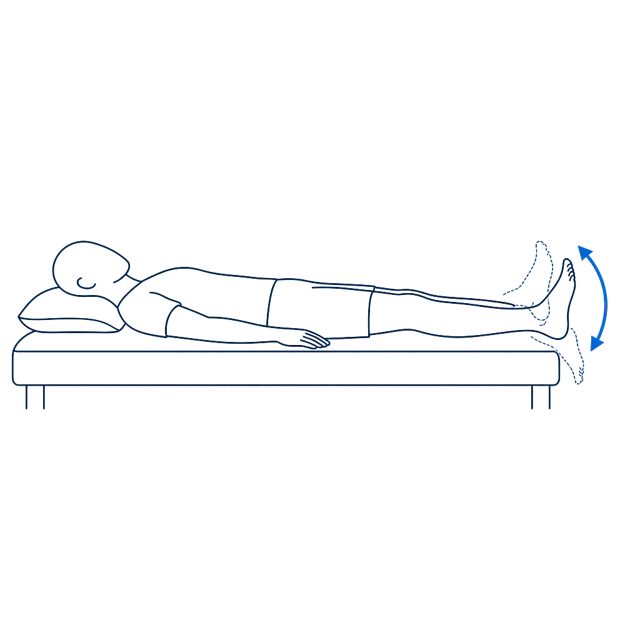
- Ankle pumps. Move your ankle up and down rhythmically to help blood flow in the calf.
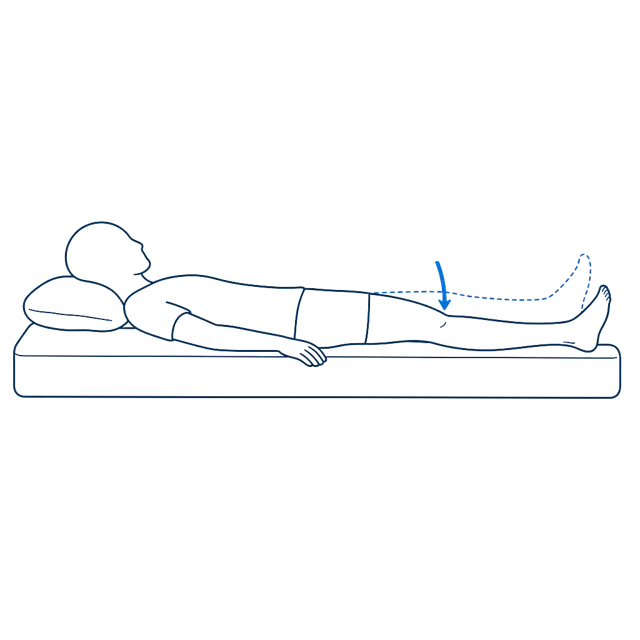
- Quadriceps set. With the leg straight, tighten the front thigh muscle while pressing the back of the knee into the bed, hold for a few seconds, then relax.
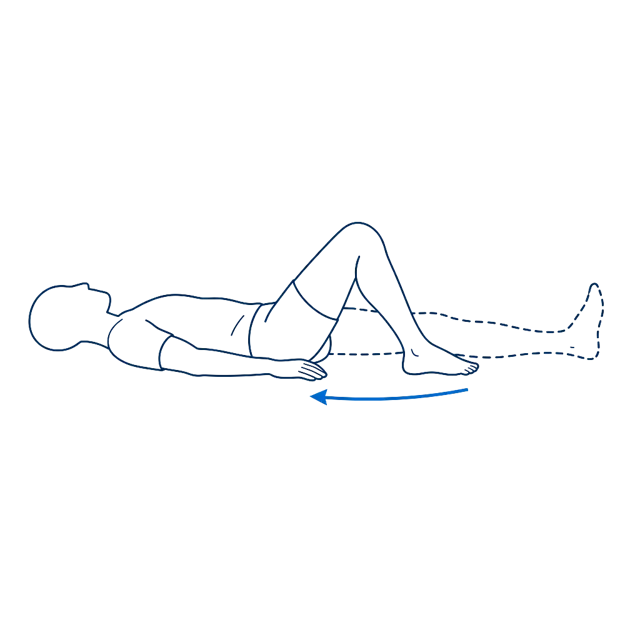
- Heel slides. Lying down, slowly slide your heel towards your buttock as far as allowed, then straighten again.
- Straight leg raise. Lift the straight leg slightly off the bed once the knee can lock straight and your doctor allows it.
- Short walks with an aid. Follow the weight-bearing pattern (partial or full) set by your surgeon.
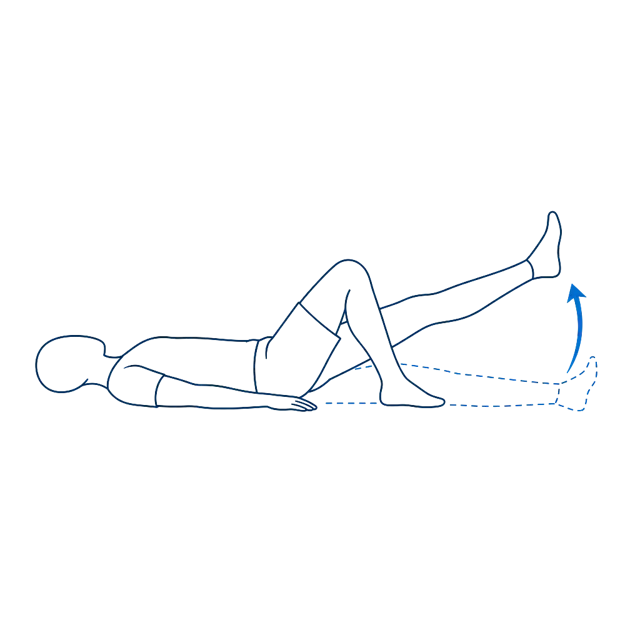
Things to avoid in the early stage: forcing the knee to bend beyond the allowed limit, kneeling before your doctor allows it, lifting heavy loads, and leaving a pillow under the knee for too long, as this can make the knee hard to straighten. If you use ice and the skin goes numb, stop icing.
What does physiotherapy add?
Home exercises matter, but a programme supervised by a physiotherapist helps make sure each stage is done safely and measurably.
- Initial assessment. The physiotherapist reviews your surgical notes, measures range of motion, strength, swelling and gait, then builds a programme in line with your surgeon's protocol.
- Graded exercise therapy. Load and difficulty are increased based on criteria achieved, in line with the Aspetar guideline approach.
- Manual therapy. Soft tissue and joint mobilisation techniques can help reduce stiffness when appropriate for the wound and approved by your doctor.
- Hydrotherapy. Exercising in water reduces load on the joint, so it is often used once the wound has closed and your doctor allows it.
- Progress monitoring. Regular measurements help you and your doctor see progress and spot early if recovery is slowing down.
- Homecare. If mobility is still limited in the early weeks, physiotherapy can be done at home.
Rehabilitation results differ from person to person and depend on many factors, including the type of surgery and how consistently you exercise. The number of sessions needed is decided after the assessment.
Frequently asked questions
When should physiotherapy start after knee surgery?
Many programmes start within the first days after surgery, often while still in hospital. The start date and type of exercise are decided by the surgeon, so bring your hospital discharge instructions to your first visit.
How long is recovery from knee surgery?
Usually several months. After ACL reconstruction, returning to work often takes about 4–6 weeks depending on the job, and returning to sport can take up to about a year. After a knee replacement, full recovery can take several months or longer.
Can I bend my knee straight after surgery?
It depends on the type of surgery. After a meniscus repair, for example, bending is often restricted for longer. Follow the angle limits set by your surgeon.
Is swelling for weeks normal?
Mild swelling that gradually goes down is generally normal. Swelling that gets worse, with redness, fever or calf pain, needs to be checked by a doctor promptly.
Can physiotherapy be done at home?
Yes, especially if you are still on crutches or find it hard to travel. The physiotherapist comes with a programme adapted to your home setting.
Physiotherapy at Bisa Gerak
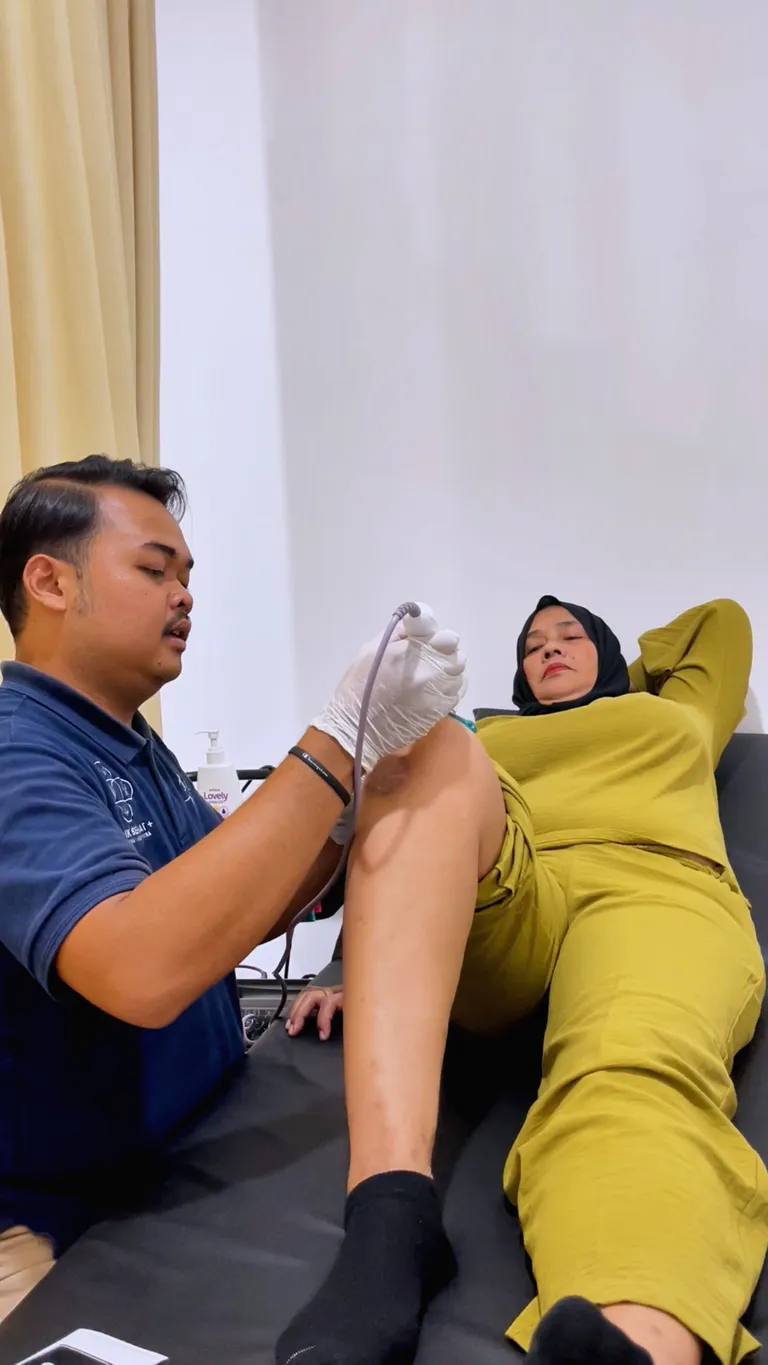
Bisa Gerak provides post-operative rehabilitation for the knee, shoulder and spine, at the clinic or in your home.
- First physiotherapy visit: Rp 350,000, including the assessment. Follow-up sessions Rp 450,000.
- Physiotherapy packages: 3 sessions Rp 1,200,000, 6 sessions Rp 2,000,000, 12 sessions Rp 3,500,000.
- Homecare: Rp 650,000 per session, including transport. Homecare packages: 3 sessions Rp 1,500,000, 6 sessions Rp 2,750,000, 12 sessions Rp 5,000,000.
- Hydrotherapy and doctor consultations are available at TAP Club Gading Serpong, including ultrasound-guided injections if the doctor decides they are needed.
- Referrals to partner hospitals: RS Ciputra CitraRaya Tangerang, Mayapada Hospital, Mandaya Hospital Group, Siloam Hospitals and RS Royal Progress.
Locations
- La Padel Puri Indah: Jl. Outer Ring Road No. 4, Rawa Buaya, Cengkareng, Jakarta Barat. Daily 10.00–22.00.
- TAP Club Gading Serpong: Jl. Symphonia Blvd, Melody Barat GF-G1, Tangerang. Daily 10.00–18.00.
- Sunter.
- In your home through our homecare service.
When you come, bring your surgical notes, discharge instructions and your surgeon's rehabilitation protocol so the programme can be tailored from the first session. To book a visit, contact us via WhatsApp.
Sources
- NHS. ACL (anterior cruciate ligament) surgery: Recovering. nhs.uk
- NHS. ACL surgery: Complications. nhs.uk
- NHS. Knee replacement: Recovery. nhs.uk
- NHS. Meniscus tear. nhs.uk
- NHS. Deep vein thrombosis (DVT). nhs.uk
- Kotsifaki R, et al. Aspetar clinical practice guideline on rehabilitation after anterior cruciate ligament reconstruction. Br J Sports Med. 2023;57(9):500–514. PubMed
What patients say
Saya sudah melakukan 3 kali treatment dan sangat merasakan manfaatnya. Nyeri yang sebelumnya cukup mengganggu aktivitas sehari-hari kini sudah jauh berkurang.
Sambutan ramah dan pelayanan fisio dijelaskan secara detail, sehingga pasien mengerti kondisinya dan bisa mengatasinya ketika di rumah.
Bisa Gerak locations
La Padel Puri Indah
Jl. Outer Ring Road No. 4, Rawa Buaya, Cengkareng, Jakarta Barat 11740
Daily 10:00 to 22:00
DirectionsTAP Club Gading Serpong
Jl. Symphonia Blvd, Melody Barat, Lantai Dasar GF-G1, Tangerang 15336
Daily 10:00 to 18:00
DirectionsAlso in Sunter, Jakarta Utara, and homecare at your home.
More articles

This article is for education and does not replace an examination by a doctor or physiotherapist.