
Elderly Parent Falling Often? How to Prevent Falls and Maintain Strength and Balance
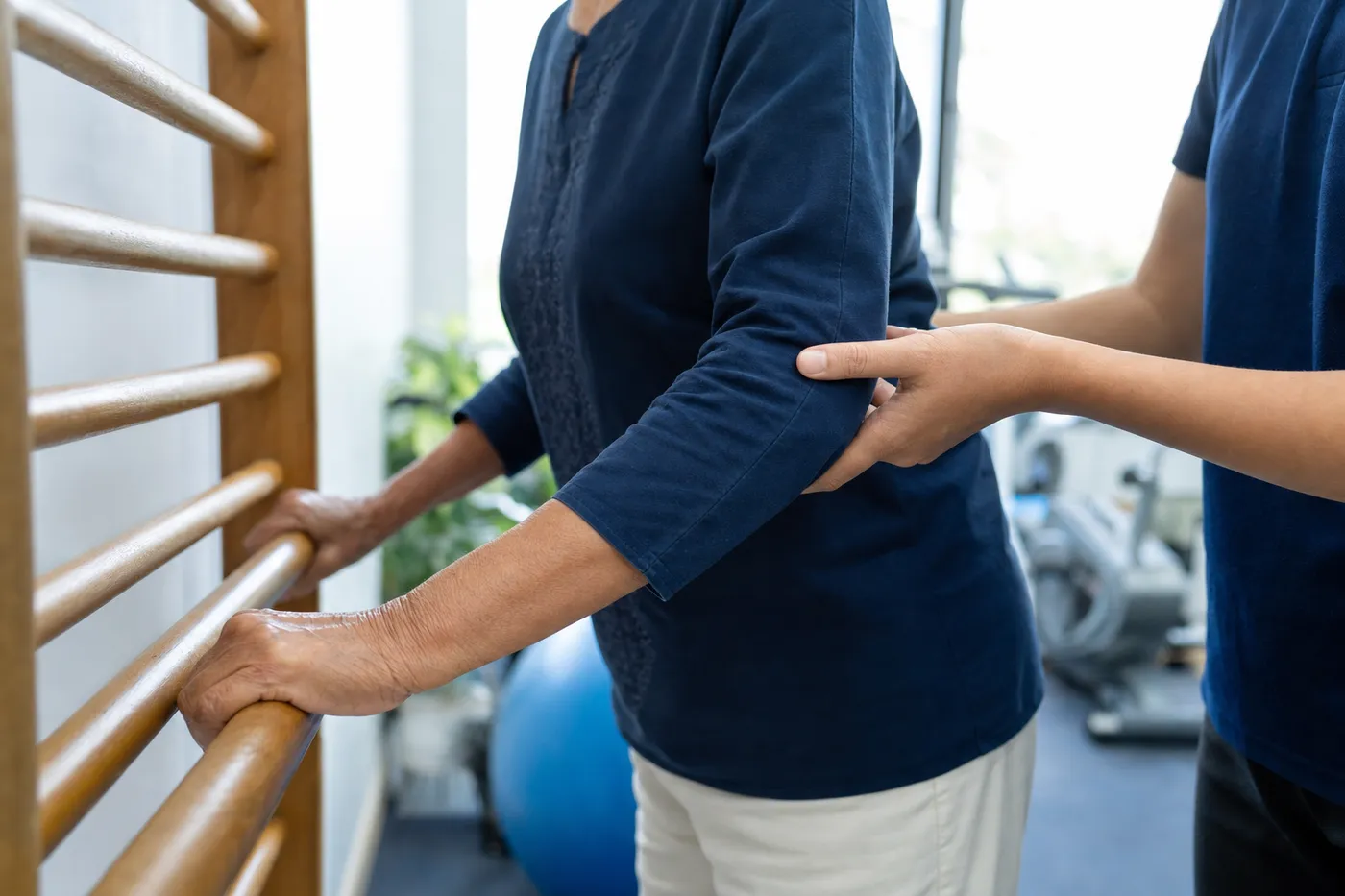
An older parent who starts tripping more, walking more slowly or holding on to walls is usually losing muscle strength and balance. The good news is that the risk of falling can be reduced: exercises that challenge balance and build strength, a safer home, and regular eye and medication checks. This article helps you recognise the signs and choose the right help for your mother or father.
Why older adults fall more easily and lose muscle strength
Falls in older people rarely have a single cause. Usually several factors add up. According to the WHO, the risk of falling rises as balance, strength, gait, vision, cognitive function and mobility decline, and with medications or illnesses that cause dizziness or low blood pressure.
Most common risk factors
- Muscle weakness in older parents, especially in the thigh and hip muscles, making it hard to get up from a chair or climb stairs.
- Declining balance, for example unsteadiness when turning around or standing with eyes closed.
- Knee and hip pain from osteoarthritis, which makes older people move less. The less they move, the weaker the muscles become, and the cycle keeps going.
- Medications such as sleeping pills, sedatives or blood pressure drugs that can cause dizziness.
- Reduced vision and hearing. The NHS recommends regular eye and hearing checks because both affect balance.
- Home environment: slippery bathroom floors, folded rugs, cables on the floor, dim lighting and stairs without handrails.
Consequences of a fall
CDC data from the United States show that more than one in four people aged 65 and over fall each year, but fewer than half tell their doctor. After one fall, the chance of falling again doubles. Falls also cause 88% of emergency visits and hospital admissions for hip fractures. Globally, the WHO estimates about 842,000 deaths from falls in 2023, around 71% of them in people aged 60 and over.
Beyond physical injury, many older people become afraid of falling after the first incident. This fear makes them move even less, when it is precisely guided movement that helps preserve independence.
Signs your parent needs help now
Adult children who live apart often only notice the problem after a parent falls. Look out for these signs when you visit or on a video call:
- Needs to push up with their hands to get out of a chair, or takes several attempts.
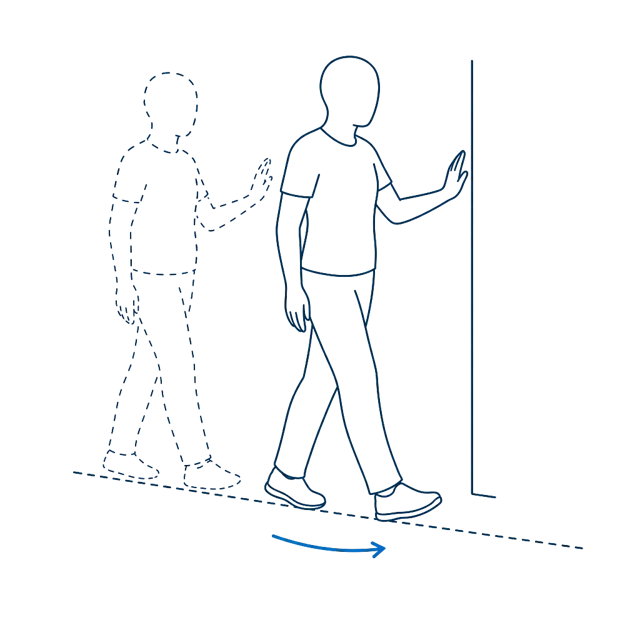
- Walks while touching furniture or walls.
- Shorter steps, shuffling feet, or frequent tripping.
- Avoids stairs, the bathroom or going out for fear of falling.
- Complains of knee or hip pain that limits activity.
- Has fallen in the past year, even without injury.
Red flags: see a doctor straight away
- A fall with a blow to the head, especially if your parent takes blood thinners.
- Unable to bear weight, or the hip or leg looks shortened or turned after a fall.
- Vertigo, fainting, chest pain or shortness of breath before the fall.
- Sudden weakness on one side of the body, a drooping face or slurred speech.
- A swollen, red and hot knee, or pain that disturbs sleep.
In these situations, a medical examination comes before any exercise programme.
How to prevent falls in older adults
The Indonesian Ministry of Health (Kemenkes RI), the WHO and the NHS agree on three pillars: strength and balance exercise, a safe home, and regular health checks including vision and medication. The CDC has also developed the STEADI programme to help health professionals assess and manage fall risk in older adults.
Home safety checklist
- Install grab bars in the bathroom, next to the toilet and along the stairs.
- Use non-slip mats in the bathroom.
- Remove cables, small rugs that slide easily and clutter from walkways.
- Make sure lighting is adequate, including night lights from the bedroom to the bathroom.
- Keep frequently used items at waist height so there is no need to climb on a chair.
- Choose well-fitting footwear with non-slip soles, not loose sandals.
- Make sure your parent always carries a phone, especially when home alone.
Simple balance exercises for seniors
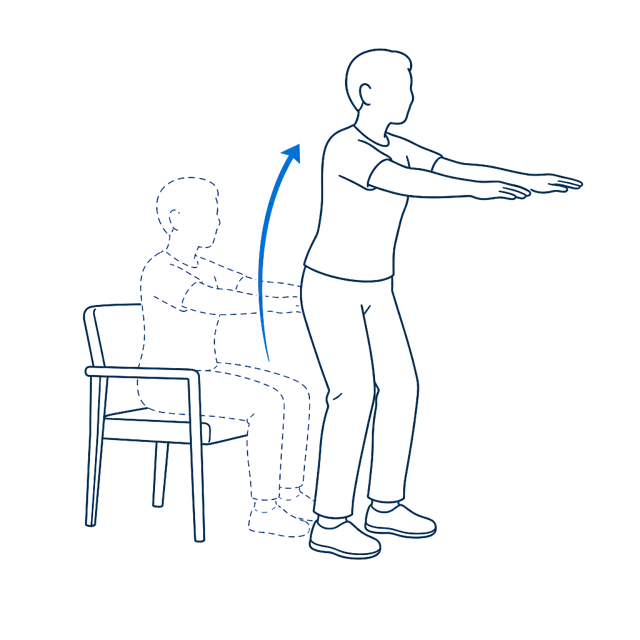
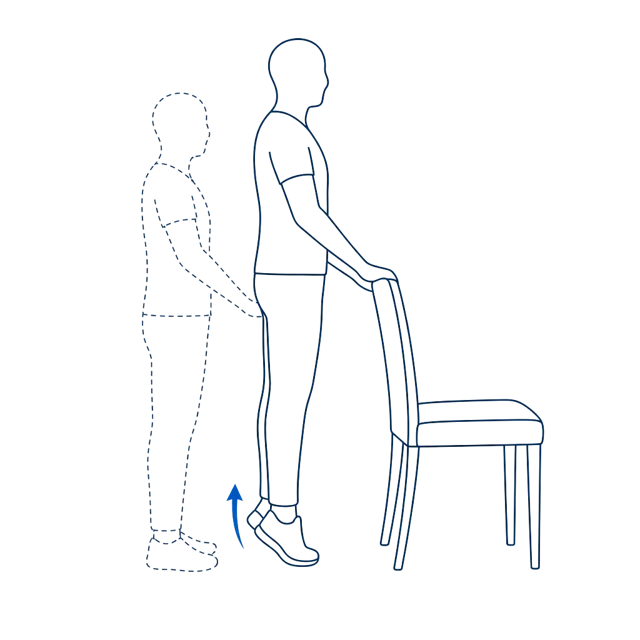
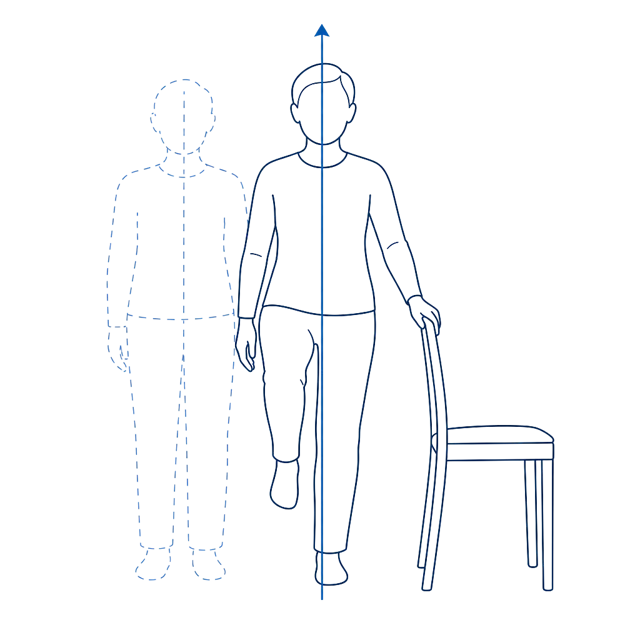
The NHS recommends being active every day and doing strength and balance exercises at least twice a week. The following movements are commonly used, but always do them next to a sturdy support, such as a kitchen counter, and preferably with someone present at first:
- Sit to stand: stand up slowly without using the hands if possible, then sit back down with control.
- Heel and toe raises: lift the heels, lower them, then lift the toes, while holding on.
- Single-leg stand: just a few seconds at first, with hands close to the support.
- Heel-to-toe walk: step as if along a straight line beside a wall.
- Regular walking on level ground, according to ability.
What physiotherapy and supervised exercise add
The WHO recommends individually tailored exercise that challenges balance and improves functional strength. Citing a Cochrane review, the WHO reports that exercise reduces the rate of falls by about 23% in the populations studied. The key words are tailored and challenging, and this is where supervision makes the difference:
- Initial assessment: the physiotherapist assesses strength, balance, gait and painful joints, so exercise starts from a safe point.
- Progressive programme: load and difficulty are increased slowly, something that is hard to manage alone at home.
- Treating knee and hip pain: strengthening exercises and manual therapy help your parent move more comfortably, so they can stay active.
- Monitoring: blood pressure, symptoms and the body's response are observed during exercise.
- Confidence: practising in a safe setting helps reduce the fear of falling.
Results differ for each person, depending on their starting condition and how consistently they exercise. The physiotherapist will explain a realistic plan after the assessment.
Frequently asked questions
At what age should parents start balance exercises?
There is no fixed age. Loss of muscle mass and balance can begin in middle age, so strength and balance training is useful from age 45 onwards, especially if there are already complaints.
My parent has knee pain. Can they still exercise?
Usually yes, and it is actually recommended, with adapted movements. If the knee is swollen, hot or very painful, see a doctor first.
My parent finds it hard to leave the house. What are the options?
Homecare physiotherapy lets the physiotherapist come to the home and assess fall risks in the home environment directly.
Is the clinic accessible for older adults using a wheelchair or walker?
Please ask via WhatsApp before coming. Tell us what your parent needs, for example a wheelchair, walker or help walking, so the team can prepare assistance and a suitable schedule.
Should my parent see a doctor before starting a programme?
If there is heart disease, blood pressure or blood sugar that is not yet stable, or a history of falls with injury, a doctor's consultation is recommended. The physiotherapist will also refer your parent if they find signs that need a doctor's examination.
Programmes at Bisa Gerak
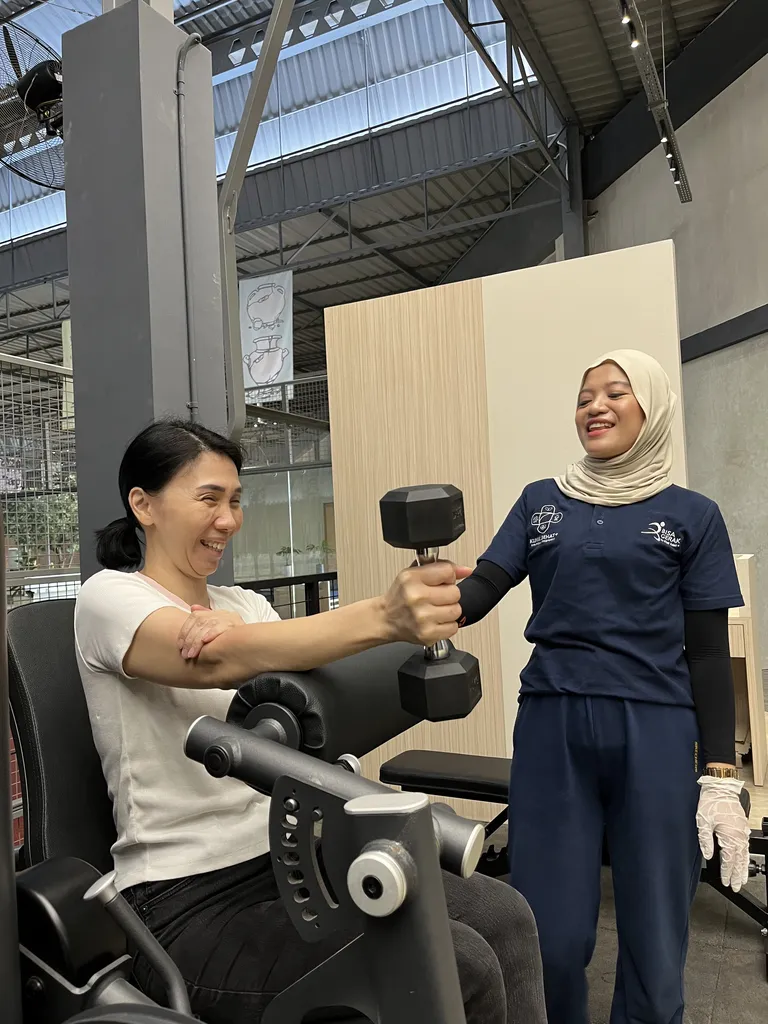
Elderly Stay Fit at TAP Club Gading Serpong is a programme for people aged 45 and over with 7 classes per week: strength, balance, yoga and cardio. Classes are led by physiotherapists and monitored by a doctor, including blood pressure and blood sugar checks. For prices, please ask via WhatsApp.
Other options depending on your parent's condition:
- Homecare physiotherapy: Rp 650,000 per session, including transport and portable equipment. Packages: 3 sessions Rp 1,500,000, 6 sessions Rp 2,750,000, 12 sessions Rp 5,000,000.
- Clinic physiotherapy: first visit Rp 350,000 including assessment, follow-up visits Rp 450,000.
- Doctor consultations in Gading Serpong, including ultrasound-guided injections if the doctor decides they are needed.
- Hydrotherapy in Gading Serpong, water-based exercise that is gentler on the joints.
Locations:
- TAP Club Gading Serpong, Jl. Symphonia Blvd, Melody Barat GF-G1, Tangerang. Daily 10.00–18.00.
- La Padel Puri Indah, Jl. Outer Ring Road No. 4, Rawa Buaya, Cengkareng, Jakarta Barat. Daily 10.00–22.00.
- In your home through our homecare service.
Contact us via WhatsApp to tell us about your parent's condition and book an appointment. The team will help you choose a programme and arrange any assistance needed.
Sources
- WHO, Falls: fact sheet
- CDC, Facts About Older Adult Falls
- CDC, STEADI: Older Adult Fall Prevention
- NHS, Falls: prevention
- Kemenkes RI, Aman di Usia Senja: Strategi Efektif Cegah Jatuh pada Lansia
- Sherrington C. et al., Exercise for preventing falls in older people living in the community, Cochrane Database of Systematic Reviews 2019
What patients say
Sambutan ramah dan pelayanan fisio dijelaskan secara detail, sehingga pasien mengerti kondisinya dan bisa mengatasinya ketika di rumah.
Udah berkali-kali fisio di sini dan selalu oke setiap sesi. Therapist-nya juga sangat informatif buat ngajarin pemulihan dan strength training di rumah.
Bisa Gerak locations
La Padel Puri Indah
Jl. Outer Ring Road No. 4, Rawa Buaya, Cengkareng, Jakarta Barat 11740
Daily 10:00 to 22:00
DirectionsTAP Club Gading Serpong
Jl. Symphonia Blvd, Melody Barat, Lantai Dasar GF-G1, Tangerang 15336
Daily 10:00 to 18:00
DirectionsAlso in Sunter, Jakarta Utara, and homecare at your home.
More articles

This article is for education and does not replace an examination by a doctor or physiotherapist.