Padel Elbow and Other Padel Injuries: Why Your Elbow Hurts After Playing and How to Treat It
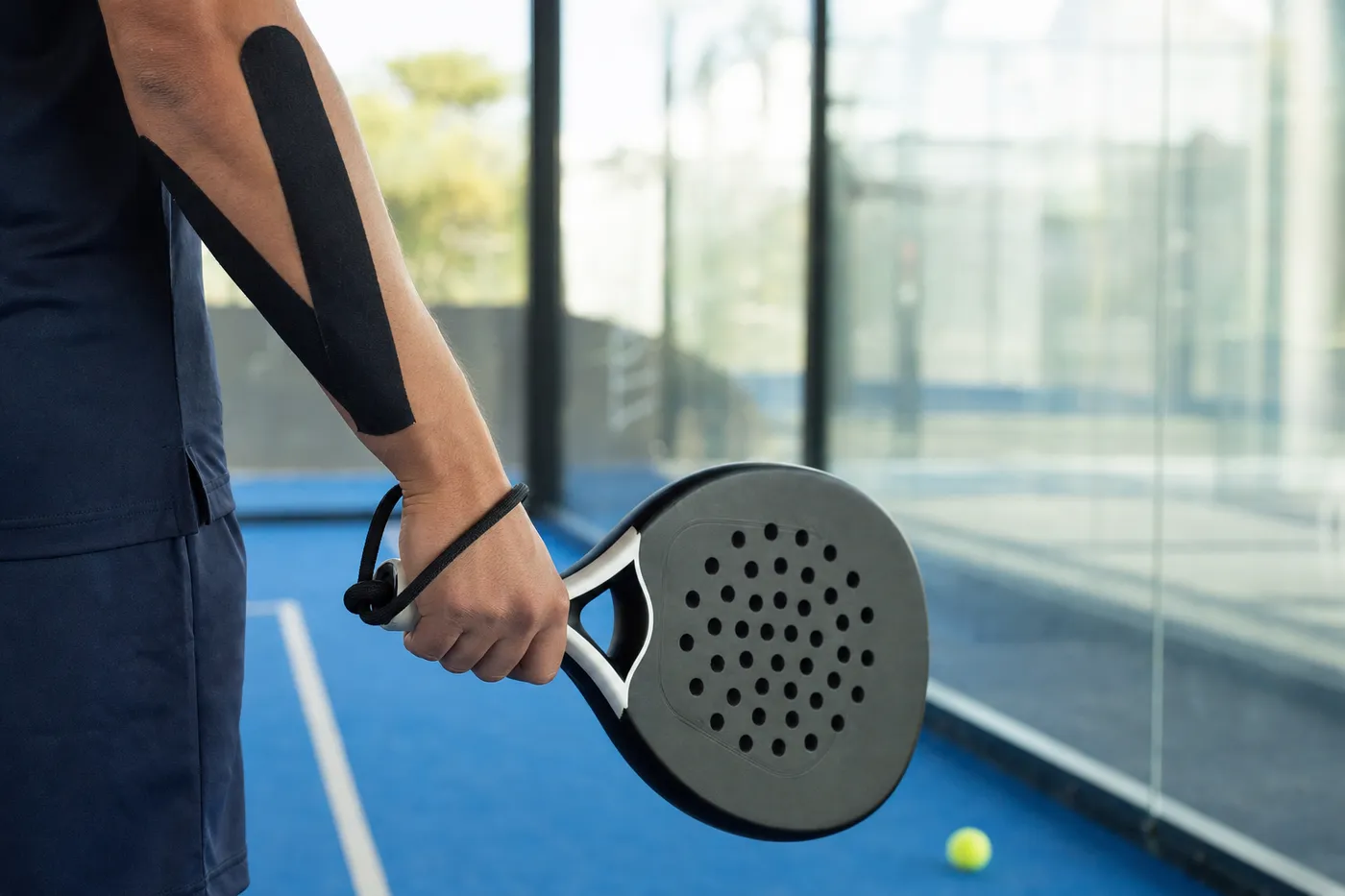
Pain on the outside of the elbow after playing padel is most often caused by tennis elbow (lateral epicondylalgia), an irritation of the tendon of the wrist extensor muscles caused by repeated load. For most people it improves with load management, self-care and gradual strengthening exercises. Padel players are also prone to shoulder pain and calf and ankle injuries, so a proper assessment helps you get back on court more safely.
What is tennis elbow and why is it so common in padel players
Tennis elbow is pain at the bony bump on the outside of the elbow, where the tendons of the muscles that bend the wrist and fingers backwards attach. The NHS explains that it usually develops when these muscles and tendons are overused and strained repeatedly. Despite the name, it also affects people who do not play tennis.
Padel has several features that add load to the elbow and forearm:
- Gripping too tightly. A padel racket is solid and stringless, so many players grip it hard throughout the rally. The wrist extensor muscles work non-stop.
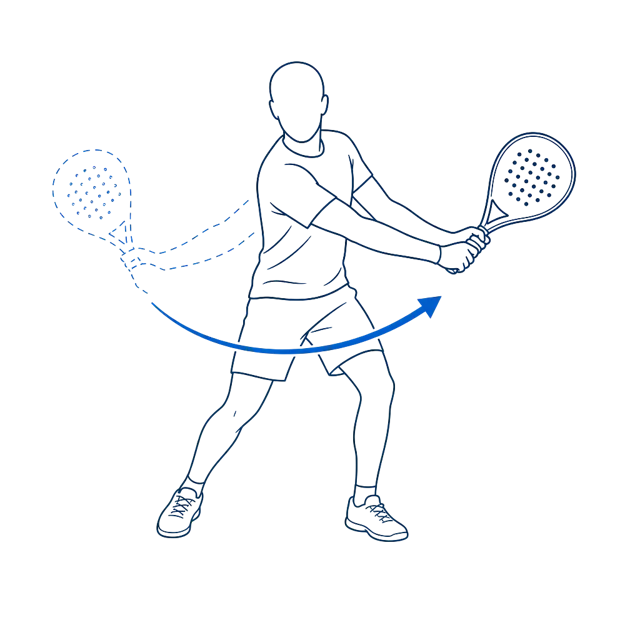
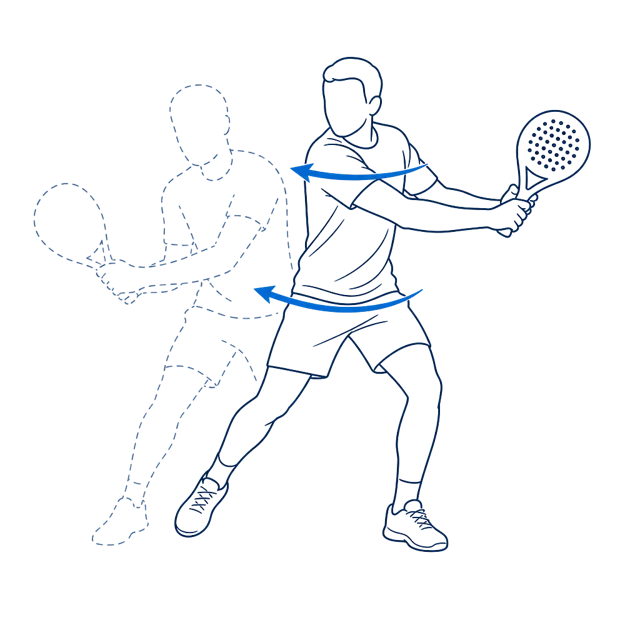
- Backhand with a bent wrist. A backhand that relies on the wrist rather than trunk rotation shifts the load onto the tendon on the outside of the elbow.
- Shots off the glass wall. Balls coming off the wall are often hit late or with the body not ready, so the arm takes more load.
- Sudden jump in playing time. Many new players go straight to several games a week without giving the tendons time to adapt.
Shoulder pain in padel players
Smashes, bandejas and viboras demand repeated overhead arm movements. According to the NHS, shoulder pain is often related to problems with the rotator cuff tendons and muscles and to overuse. Typical symptoms are pain when lifting the arm, when hitting overhead, or when sleeping on the painful shoulder.
Calf and ankle injuries
A padel court is small, so play is full of short steps, sudden braking and changes of direction. This pattern can trigger calf muscle strains, Achilles tendon irritation and ankle sprains when the foot rolls outwards. The NHS classes a sprain as a ligament injury and a strain as a muscle injury, and both are common in fast-moving sports.
Symptoms of tennis elbow and padel injuries to look out for
Common signs of tennis elbow according to the NHS and the MSD Manual:
- pain on the outside of the elbow that can spread down the forearm;
- pain when gripping, turning a door handle, lifting a cup or shaking hands;
- pain that gets worse on the backhand or after a long session;
- elbow stiffness in the morning.
Red flags that need a doctor
See a doctor or go to the emergency department straight away if you have:
- a visibly deformed joint, or a cracking sound with severe pain;
- inability to put weight on the injured leg;
- a feeling of being kicked in the back of the heel while moving, which may signal an Achilles tendon rupture;
- an elbow or shoulder that cannot be moved at all;
- persistent tingling or numbness in the hand or foot;
- an injured area that is hot, red and accompanied by fever;
- pain that does not improve after a few weeks of self-care.
How to treat elbow pain and injuries after playing padel
1. Manage the load, do not stop completely
Long periods of complete rest are rarely the answer for tendon problems. Cut down how long and how often you play, avoid the shots that trigger pain, then increase the load gradually. Mild pain that settles by the next day is generally acceptable, while pain that keeps getting worse means the load needs to come down.
2. Self-care
- A cold pack wrapped in a cloth for about 15 minutes to ease pain after playing.
- For a fresh sprain, the NHS recommends rest, ice, compression and elevation in the first few days.
- Over-the-counter painkillers can help in the short term. Follow the label or a pharmacist's advice.
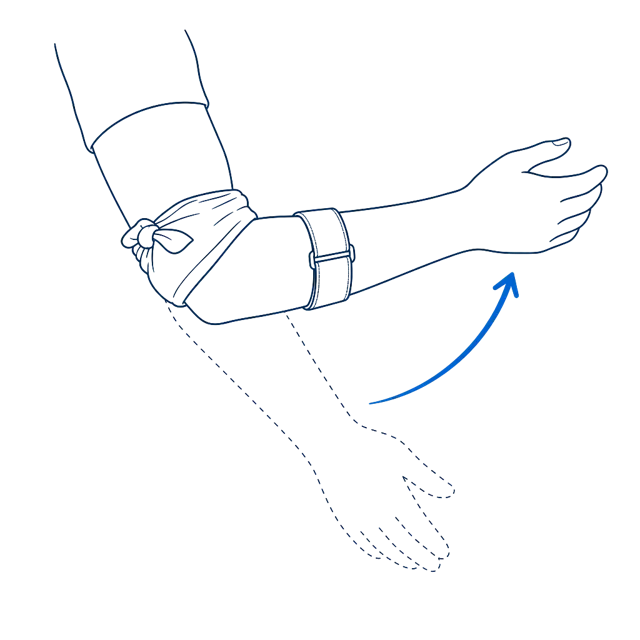
- A forearm strap (counterforce brace) can help some players with tennis elbow.
3. Technique and equipment
- Relax your grip between shots and avoid bending your wrist on the backhand.
- Use trunk and leg rotation to generate power, not just your arm.
- Choose a racket with a suitable weight and stiffness, and a grip size that fits your hand.
- Wear padel shoes with soles suited to the court surface to support your ankles.
- Do a dynamic warm-up for the shoulders, calves and ankles before playing.
4. What physiotherapy adds
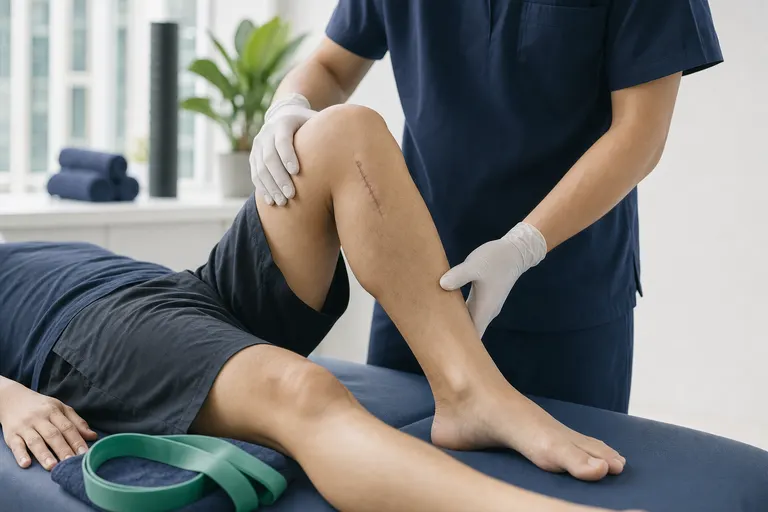
A physiotherapist helps find the cause of the problem, not just ease the pain. A Cochrane review on tennis elbow concluded that manual therapy and prescribed exercise may slightly reduce pain and improve function compared with no treatment, so an active approach remains the basis of care. In practice, physiotherapy for padel players usually includes:
- Assessment. Checking movement, strength and stroke or footwork patterns to confirm the source of pain and rule out other conditions.
- Manual therapy. Soft tissue and joint techniques to reduce tension and improve movement.
- Ultrasound or TENS. Supporting modalities to help reduce pain, used alongside exercise, not instead of it.
- Kinesio tape. Elastic tape for support and comfort while playing.
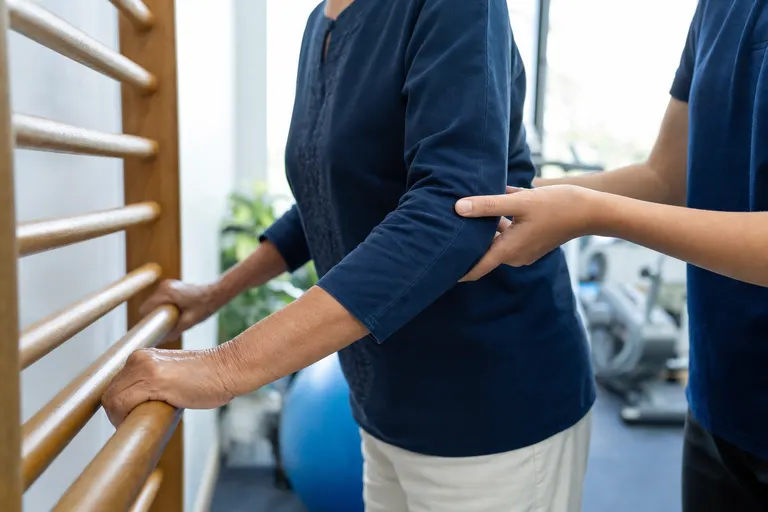
- Progressive strengthening. Gradual exercises for the forearm, rotator cuff, calves and ankles, including balance training.
- Return to play. Measured stages from light training and on-court drills to full matches.
Recovery time differs from person to person and depends on severity, how long the problem has lasted and how consistently you exercise.
Frequently asked questions
Do I have to stop playing padel if I have tennis elbow?
Not always. Many players can keep playing with reduced duration and intensity, as long as the pain stays mild and is not worse the next day. A physiotherapist can help you set a safe load limit.
Ice or heat for elbow pain after padel?
After playing, a cold pack usually helps ease pain. For long-standing muscle stiffness, some people find heat more comfortable. Choose whatever reduces your symptoms.
Do elbow straps work?
A forearm strap can reduce pain during play for some players, but it is best used together with strengthening exercises, not as the only treatment.
When does a sprained ankle need to be seen by a doctor?
When you cannot put weight on it, the ankle looks deformed, the swelling is very large, or the pain does not improve after a few days of self-care.
What is the difference between recovery massage and physiotherapy?
Recovery massage helps your muscles feel more relaxed after playing. Physiotherapy starts with an assessment and is aimed at treating injuries or persistent pain through targeted therapy and exercise.
Physiotherapy at Bisa Gerak
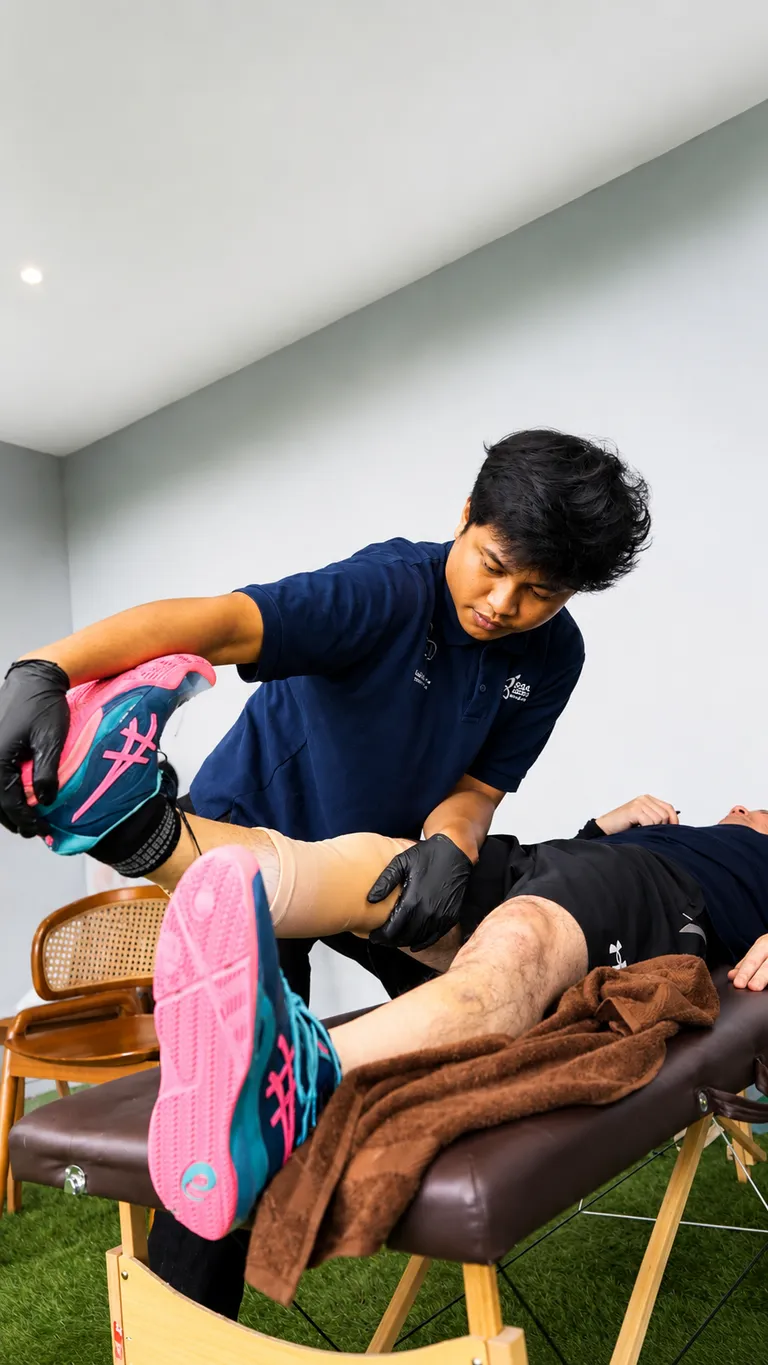
Bisa Gerak is a physiotherapy clinic that has been the medical partner at more than 10 padel events, with a medical team and a VIP ambulance on standby at the venue. We know the demands of padel up close, from the court to the treatment room.
Services and prices
| Service | Price |
|---|---|
| Recovery massage, first visit (after playing, manual and massage gun) | Rp 250,000 |
| Recovery massage, follow-up visit | Rp 350,000 |
| Recovery massage package, 4 sessions | Rp 999,000 |
| Physiotherapy, first visit including assessment | Rp 350,000 |
| Physiotherapy, follow-up visit | Rp 450,000 |
| Physiotherapy package, 3 sessions | Rp 1,200,000 |
| Physiotherapy package, 6 sessions | Rp 2,000,000 |
| Physiotherapy package, 12 sessions | Rp 3,500,000 |
| Kinesio tape | +Rp 50,000 per area |
For players who want to get back on court after an injury, we run the Back to Sport rehabilitation programme.
Locations
- La Padel Puri Indah, inside the padel venue, so you can recover straight after playing. Jl. Outer Ring Road No. 4, Rawa Buaya, Cengkareng, Jakarta Barat. Open daily 10.00–22.00.
- TAP Club Gading Serpong, Jl. Symphonia Blvd, Melody Barat GF-G1, Tangerang. Open daily 10.00–18.00, integrated with the gym.
What you get
- An assessment at your first physiotherapy visit to understand the source of the problem.
- A treatment plan combining manual therapy, supporting modalities and exercise.
- Guidance on playing load and staged return to court through the Back to Sport programme.
- The option to recover right after playing at La Padel Puri Indah.
To book a recovery massage or physiotherapy session, contact us via WhatsApp and choose the location that suits you best.
Sources
- NHS. Tennis elbow. https://www.nhs.uk/conditions/tennis-elbow/
- NHS. Shoulder pain. https://www.nhs.uk/conditions/shoulder-pain/
- NHS. Sprains and strains. https://www.nhs.uk/conditions/sprains-and-strains/
- NHS. Tendonitis. https://www.nhs.uk/conditions/tendonitis/
- MSD Manual Consumer Version. Lateral Epicondylitis (Tennis Elbow). https://www.msdmanuals.com/home/injuries-and-poisoning/sports-injuries/lateral-epicondylitis
- Cochrane. Manual therapy and exercise for lateral elbow pain (CD013042). https://www.cochrane.org/CD013042
What patients say
Habis fisio di sini untuk persiapan Maybank Marathon 2026. Kaki dari kaku jadi enteng. Tempatnya bersih.
 David TheoPatient, Gading Serpong
Pertama kali coba sport massage. Pendaftaran cepat, ternyata buka sampai hari Minggu. Treatment-nya mantap, langsung terasa bedanya.
Bisa Gerak locations
La Padel Puri Indah
Jl. Outer Ring Road No. 4, Rawa Buaya, Cengkareng, Jakarta Barat 11740
Daily 10:00 to 22:00
DirectionsTAP Club Gading Serpong
Jl. Symphonia Blvd, Melody Barat, Lantai Dasar GF-G1, Tangerang 15336
Daily 10:00 to 18:00
DirectionsAlso in Sunter, Jakarta Utara, and homecare at your home.
More articles
This article is for education and does not replace an examination by a doctor or physiotherapist.